Postcards: A Glimpse of the Past

 ‘Soldiers leaving Horsham during the European War September 10th 1914, No.1’
‘Soldiers leaving Horsham during the European War September 10th 1914, No.1’, a photographic postcard published by Bon Marche of Horsham, circa 1918

The belle époque of postcard sending was between 1899 and 1914. At the height of this craze, a reported average of more than 723,000 postcards were sent every day. Each card was delivered the following day and all for a halfpenny a time. As people posted cards they also started to collect them. With an estimated 264 million postcards delivered in a year, it is no surprise that photographers and publishers popped up in towns and villages across the British Isles to cash in on this boom.

Postcards were printed lithographically, photographically and in letterpress, some were even hand-coloured or tinted. With such a rich diversity of photographers and printers, there is a rich variety of postcards to delight the collector. If your passion is social history, saucy seaside humour, vintage cars, topography, railways, churches or almost any other subject you can think of, there will be postcards for you.

Due to Post Office regulations, postcards started out smaller than the familiar size most of us would recognise today. These ‘court-size’ postcards were only allowed to have the address on one side, so any message would have to be shared with the publisher’s image. In 1902 the Post Office changed their rules, allowing for the more traditional postcard size. At the same time a dividing line was introduced on the reverse, allowing space for the address and, for the first time, a message too, freeing up the entire front for a pictorial design. Postcard collecting was the hobby of many Edwardian ladies in particular but it waned with the outbreak and experience of the 1914-18 Great War. The light-hearted days, of which postcards had been an expression, were passing.

Toovey’s postcards, books and paper collectables specialist is my brother, Nicholas. Thanks to Nick’s personal interest in postcards, his specialist expertise and continuing promotion of sales of paper collectables and postcards, Toovey’s are one of only a very few auctioneers to have been accepted for membership of the Postcard Traders Association (PTA) in the country. So it is to Nick that I turn to find out what makes a postcard valuable. “Condition is very important,” says Nick. “Prices are considerably higher for mint examples than for worn cards. Be careful though, – a very rare card can still be valuable even if not perfect. Most cards will have the odd bump after almost 100 years, which is often acceptable to collectors who tend to favour these older cards. Perhaps more important is the subject and rarity of the image.”

Photographic postcards are the ones which most delight Nick. “They provide an accurate and unedited view of our country’s past – familiar scenes, now changed, and social history a century ago.”

‘The Mystery Towers’
‘The Mystery Towers’ at Southwick, a photographic postcard by Joseph Gurney Ripley, circa 1918

There are plenty of interesting postcards relating to Sussex. Take, for example, the two postcards illustrated; both date from the time of the Great War. The first was part of a collection of postcards relating to Southwick in Sussex. The image was taken by the photographer Joseph Gurney Ripley. It depicts two huge structures, which were constructed at Shoreham and Southwick in Sussex. These forts were built as part of a proposed chain of twelve, which would have been sunk between Dungeness and Cap Gris Nez, to deter U-boat attacks along our shores. Building began in June 1918 under a cloud of secrecy and Sussex locals nicknamed them ‘The Mystery Towers’. The Armistice came in November 1918 and they were never deployed for their original intention, although they were still being constructed as late as 1920. One of the towers did become the Nab Tower off the Isle of Wight. The collection of 267 postcards sold at Toovey’s for £2,900.

The second is titled ‘Soldiers leaving Horsham during the European War September 10th 1914, No.1’ and was published by Bon Marche, a company established by Frank C. Lewis, who in the years preceding the First World War became Horsham’s leading postcard maker. Many of these postcards are notable because of the quality of the photographs. Their images included towns and villages across the west of Sussex. A copy of this card could be bought today for about £15 at a postcard fair.

Where should Sussex collectors begin if they would like to explore collecting postcards? “I’m always pleased to advise,” Nick explains. “The important thing is to see as many postcards as you can and compare one with another, so that you begin to be able to see differences in quality between images, publishers, subjects and condition and to see how these differences affect their value. When you are starting off, though, always ask advice. Those involved with postcards are usually delighted to share their experience.” Aside from Nicholas’s specialist auctions, the three main postcard fairs locally are held at Haywards Heath on the first Saturday of every month, Shoreham every other month and Horsham once a year. A valuable resource for postcards of Sussex interest is the website www.sussexpostcards.info.

Nick is presented with endless albums of postcards in his work; does he ever tire of them? “No,” he replies without hesitation. “I never know what I will find and it’s always exciting to discover images which I haven’t seen before. People bring in albums for sale in my specialist auctions all the time and they are often surprised and delighted by how much they are worth. It’s a pleasure to share one’s knowledge and passion for postcards with others.”

Whatever your interests, postcards provide an opportunity to acquire wonderful images and a glimpse back into the past.

Toovey’s next specialist auction of postcards and paper collectables is to be held on 6th August 2013 and Nicholas is accepting entries until 3rd July 2013.

By Revd. Rupert Toovey. Originally published on 12th June 2013 in the West Sussex Gazette.
Japanese Treasures at Horsham Museum & Art Gallery

Image Copyright Victoria and Albert Museum, London
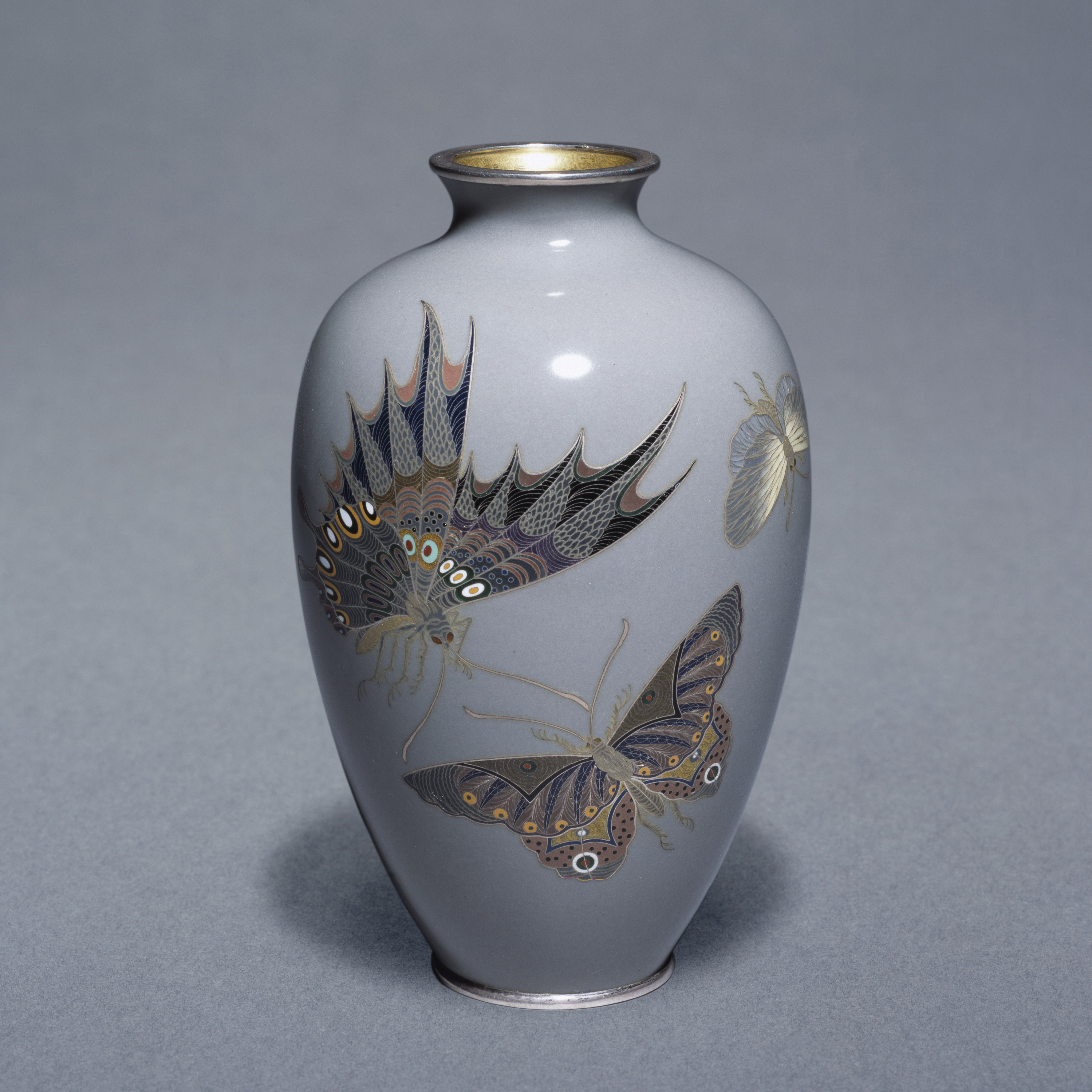
FE.40-2011 Vase. Vase, Nagoya, mark of Hayashi Kodenji, c.1880-90. Cloisonné enamel. V&A: FE.40:1-2011. Gift of Edwin Davies. © Victoria and Albert Museum, London

Thanks to the generosity of Mr Edwin Davies CBE, who gave his outstanding collection of Japanese Cloisonné enamels to the V&A, Horsham Museum & Art Gallery are going to display some of the finest, most jewel-like objects ever made. It was Davies’ vision that a selection of items should tour the country and with the help of the Victoria and Albert Museum, London, it is being made a reality. Horsham District Council’s Horsham Museum & Art Gallery is one of just ten venues nationwide that will be able to display these masterpieces of Japanese art and craft. The exhibition Japanese Treasures: Cloisonné enamels from the V&A opens on 15 June and runs until 22 September.

The exhibition highlights the ability of a country in turmoil to create artistic masterpieces through the 61 objects on display at the museum. For the golden age of the craft was the era portrayed in the 2003 film The Last Samurai, when Japan’s old feudal society rapidly transformed itself. The craftsmen who made the celebrated Samurai armour and weapons were metaphorically not beating swords into ploughshares, but into exquisite enamels. Some of their patrons, the Samurai class, became acknowledged masters of this new craft, reflecting the degree that the society was changing.

Over a century ago, as this revelatory exhibition shows, the Japanese were perfecting enamelling, the art of wire in-fills, of creating deeper colours, of polishing to a higher gloss the finished surface and then making objects that appealed to the west. Enamel vases are decorated with Japanese images known to appeal to the western aesthetic: peonies, chrysanthemums, swallows, carp, dragons and butterflies are featured against a range of deep colours. Each item is like a treasure and so unsurprisingly whilst in the west we link the name to a manufacturing process, the cloisonné, in Japan, is linked to the ‘Seven Treasures’ mentioned in Buddhists texts.

Image copyright Victoria and Albert Museum London
Vase, Kyoto. Vase, Kyoto; the mark of Namikawa Yasuyuki, c.1875-80. Cloisonné enamel V&A: FE.67-2011. Gift of Edwin Davies. © Victoria and Albert Museum, London

Horsham, an ancient market town noted for its stone roofs in the heart of Sussex, may seem a strange venue to host such an exhibition. Yet at the very same time the Japanese were creating these highly sophisticated superbly designed masterpieces residents of the town were visiting the remote lands. Robert Henderson and his wife Emma, who lived at Sedgwick Park, toured Japan, as the old order was being subsumed in a dash to modernise. They brought back photographs of the people and places to remind them, some of these will be on display. The exhibition itself would not have been possible without the good will and support of the local community including the auction house Toovey’s.

Edwin Davies CBE, OBE is one of the V&A’s most generous benefactors and has been a trustee of the Museum since 2007. Until 2006, he was Chairman of Strix, a leading manufacturer of electronic heating controls for kettles and other water-heating appliances. The company won many prestigious export and innovation awards and Davies was awarded an OBE in 2000 for services to industry and a CBE in 2012. A prominent philanthropist, he has supported a wide range of institutions.

The Victoria and Albert Museum, is the world’s greatest museum of art and design. It has been collecting Japanese Cloisonné enamels since 1867.

Hans Feibusch ~ Church, Art & Patronage

‘Christ in Majesty’, 1954, St Mary’s, Goring-by-Sea

Hans Feibusch represents a figurative tradition in 20th century art, which has sometimes been overlooked in favour of abstraction and other modern artistic expressions. He also has an important place in the history of a revival in church patronage of art in the Modern British Period.

Hans Feibusch arrived in England in 1933 from Nazi Germany to escape persecution as a Jew. He had become an established painter in Germany, being awarded the German Grand State Prize for Painters in 1930 by the Prussian Academy of Arts in Berlin. His talent was soon recognized in England and he exhibited regularly, often with the London Group, to which he was elected in 1934. The London Group included many of Britain’s leading artists.

His first public commission came in 1937 when Edward D. Mills invited Feibusch to paint a mural, ‘Christ washing the Disciples’ Feet before the Last Supper’, for the new Methodist Hall in Colliers Wood, London. The painting attracted a great deal of interest from the national press and brought the artist to the attention of Kenneth Clark, later Lord Clark. Clark was very influential and was director of the National Gallery in London during the war. His television series and book ‘Civilisation’ would subsequently capture the imagination of a generation.

Bishop George Bell of Chichester wrote to Kenneth Clark at the National Gallery in 1939 asking for suggestions as to artists who might be prepared to accept commissions. Clark introduced Feibusch to Bell and the two men met for lunch in Brighton on New Year’s Day 1940. It marked the beginning of a lifelong friendship, during which Bell would be Feibusch’s leading patron. Both men were unprepared to turn their backs on evil. Feibusch personified Bell’s deep and active concern for the plight of the Jews in Germany and its refugees.

In 1929 Bell became Bishop of Chichester, bringing with him the patterns of worship and the arts from Canterbury Cathedral, where he had been dean. He wished to see churches filled once more with colour and beauty. Eternal truths could be proclaimed anew in music, modern art and poetry. More people would be drawn into the Christian community by the revival of this old alliance and renewed vitality. Among visitors to the Bishop’s Palace in Chichester were Gustav Holst, Vaughan Williams, Henry Moore, Hans Feibusch, T.S. Eliot, Vanessa Bell and Duncan Grant.

Bell and Feibusch’s very particular friendship blessed Sussex with a number of murals by this artist, which can be seen at St Wilfred’s, Brighton, Chichester Cathedral, The Bishop’s Chapel, Chichester, and St Mary’s, Goring-by-Sea.

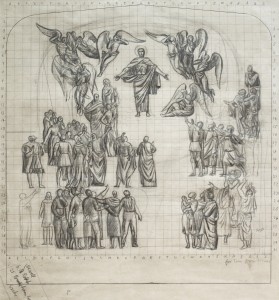
Sketch for ‘Christ in Glory’ at St Sidwell’s, Exeter, circa 1957
Pencil sketch for ‘Christ in Glory’ at St Sidwell’s, Exeter, circa 1957

Painting onto the walls of churches and cathedrals requires painstaking preparation and the pencil cartoon by Feibusch shown here gives us a valuable insight into his work. It is a sketch for the mural ‘Christ in Glory’, painted in 1957 at St Sidwell’s, Exeter. Most striking to me are the prompts from Feibusch’s earlier works in Sussex. ‘Christ in Majesty’, also shown, was painted in 1954 at St Mary’s, Goring-by-Sea. Like in the sketch for St Sidwell’s, it displays Feibusch’s knowledge of Renaissance artists, whose influence is displayed in this mural. The Mediterranean lilac-blue, ochre and terracotta hues serve to emphasize Christ’s own pose, his arms open in a gesture of welcome and embrace. The figures are convincing, almost sculptural, with a quality of mass and light. Feibusch’s painting gifts them with a grace and nobility through their poses, which to some can seem to deprive them of life and passion. At first glance there is little that is unexpected but, as we look more closely at the angels, we note that the expressions on some of their faces are less angelic and more mischievous, acknowledging his depth of insight into the human condition, which can reflect good and evil. In the St Sidwell’s sketch, men and women look up to Christ with gestures of praise and thanksgiving, reminiscent of the figures painted in the Ascension scene painted by Feibusch in the Bishop’s private chapel in Chichester.

While the attention of the art world moved on to focus on the abstraction of Ben Nicholson and the new depiction of naturalistic forms by artists like Henry Moore and Graham Sutherland, Hans Feibusch continued to paint and draw in his own particular figurative style, influenced by the Renaissance. His style of painting has been the subject of renewed interest in recent years, with retrospective exhibitions held at Pallant House Gallery, Chichester, in 1995 and more recently at the Bishop Otter Gallery, University of Chichester, in 2012.

The murals deserve to be celebrated. They represent the work of a gifted artist whose life is inexorably bound up with the extraordinary history and events of his time. For me, though, it is Feibusch’s sketches and drawings that reveal his true talent.

Hans Feibusch’s work rarely comes to the market and so it is with some excitement that I am looking forward to Toovey’s specialist fine art sale on Wednesday 12th June, in which the St Sidwell’s ‘Christ in Glory’ sketch and a number of other studies and prints by the artist will be auctioned.

By Revd. Rupert Toovey. Originally published on 5th June 2013 in the West Sussex Gazette.

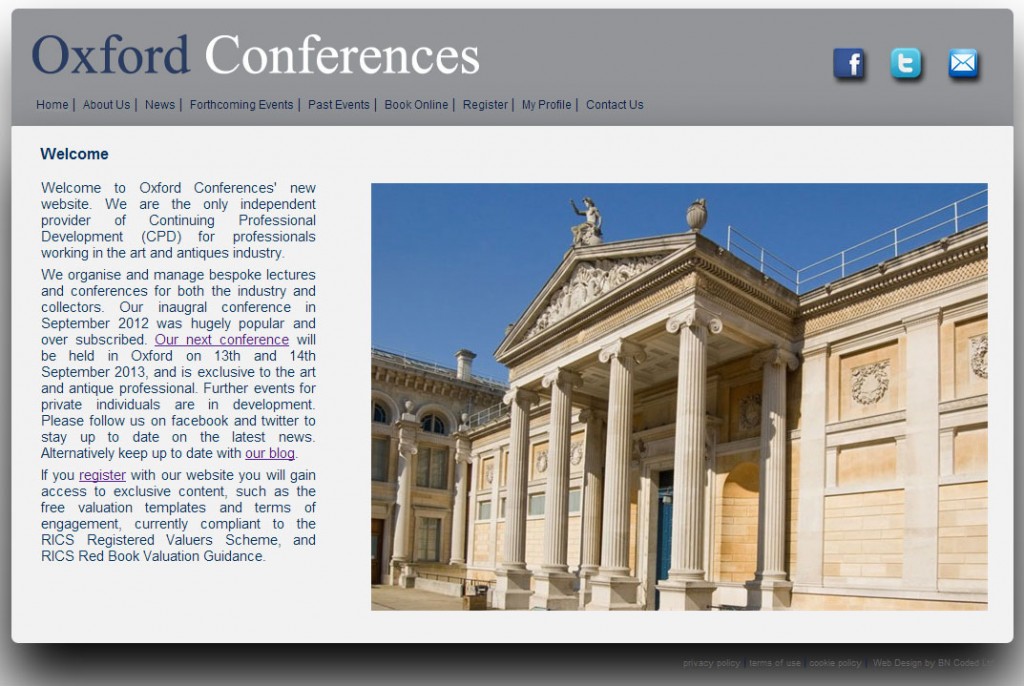
Rupert Toovey launches www.oxfordconferences.org

Oxford Conferences WebsiteIn 2012, Rupert Toovey and Jeremy Lamond founded Oxford Conferences Limited. It was established to deliver excellence through education and dialogue and is the only independent provider of continuing professional development for professionals working in the art and antiques industry. The inaugural conference was held in September 2012 and offered delegates a series of lectures at the Ashmolean Museum, Oxford. This year a conference exclusive to the art and antique professional will be held on 13th and 14th September. Further events for private individuals are in development.

Oxford Conferences has recently launched its new website, visit www.oxfordconferences.org for more information.

Chelsea Porcelain

Chelsea Red Anchor Period porcelain
A collection of Chelsea Red Anchor Period porcelain, circa 1755, sold at Toovey's

Chelsea is unique amongst English porcelain manufacturers of the 18th century in that its entire production was devoted to the luxury market and intended to delight the ‘Gentry’ and ‘Nobility’ of these Isles. Porcelain made at Chelsea, especially during the Red Anchor Period (1753-1757), is regarded by many as the finest porcelain made in England in the 18th century. Today Chelsea porcelain is still revered by connoisseurs, just as it was when it was first made.

18th century Continental porcelain manufacturers like Meissen and Sévres often benefited from the financial security afforded by royal and aristocratic patronage. In contrast the English factories were private enterprises predominately manufacturing soft-paste porcelains rather than the hard-paste porcelains from China and the Continent. The survival of these English factories was entirely dependent on their commercial success in what was a highly competitive market. Factories like Bow, Liverpool and Lowestoft produced wares whose decorative styles were influenced by earlier earthenware pieces. The confident, forthright quality of their output broadly reflected the tastes of a wide cross-section of English society. Porcelain from factories like Chelsea, Derby and Worcester were finely made, their tastes influenced by Meissen and Sévres.

Nicholas Sprimont was not only a proprietor of the factory but is generally accepted as being the guiding artistic force at Chelsea. He was born in Liege in 1716. I have always felt that the fashionable styles employed at Chelsea, its concentration on the luxury market, and the quality of modelling, all owe something to Sprimont’s background as a Huguenot silversmith.

By opening the porcelain works in Chelsea close to the fashionable Ranelagh pleasure gardens Sprimont made the company accessible to the ‘Nobility’ and ‘Gentry’ for whom his porcelain output was expressly created. Although Nicholas Sprimont did not benefit from a patron to subsidize his commercial activities he did have influential contacts and amongst these was Sir Everard Fawkener. Fawkener provided financial backing to the Chelsea porcelain factory and was secretary to George II’s second son, Prince William Augustus, the Duke of Cumberland (1721-1765). The Duke was a celebrated figure in 18th century England for his victory at the Battle of Culloden in 1746 which crushed the Jacobite rebellion. There is a popular, but inconclusive, theory amongst art historians that it was actually the Duke who invested in Chelsea through his secretary Fawkener. Whether this is true or not society letters of the time confirm that Prince William expressed a great interest in the factory and Chelsea made a bust of him around 1746.

Porcelain made during the Red Anchor Period at Chelsea (1753-1757) is regarded by many as the finest porcelain made in England in the 18th century. The Red Anchor Period derives its name from the anchor mark which was painted on the base of objects in underglaze red during this period. During this period the glaze became more translucent, though prone to crazing, and a new formula for the porcelain body allowed for thinner potting making wares lighter in weight. A shift in the emphasis of design reflected the continuing influence of Meissen’s output. The celebrated fruit and vegetable forms of this period reflect a move towards the naturalistic.

Illustrated here are several Chelsea Red Anchor naturalistic tureens and a pair of plates which are increasingly rare and sort after in today’s market. These examples came from the estate of a collector who lived to the north of Chichester where I discovered them on a cold winter’s day late last year. They all date from the mid-1750s. Their marks were discretely placed on the bases which is typical of Chelsea at this date. The underglaze red mark has a rounded crown beneath which is the anchor’s shank and arms which terminate in sharp, barbed flukes. The cauliflower and pair of lettuce tureens are so beautifully modelled and enamelled that they seem almost edible; the curled lettuce leaf handles on the latter are a particularly charming detail. Despite damage and repairs these two lots, just 11cm and 13cm high, realised £2600 and £2700 respectively in a specialist auction.

The pair of Chelsea porcelain circular dishes with stalk handles followed the mid-18th century naturalistic taste; white glazed and relief moulded with scolopendrium leaves picked out in green and puce, they were in exceptional condition which was reflected in the £5300 paid for them.

My favourite piece from this collection was the asparagus tureen and cover naturalistically modelled as a bundle of tied asparagus spears. It reminded me of happy days in Jersey where my wife’s Grandpop had a large asparagus bed in his beautifully kept walled vegetable garden. His house and garden nestled in a former quarry and from the wooded bank you could see Gorey Castle and the ocean beyond. The tureen deservedly made £2700.

This fine, horticultural inspired, collection delighted connoisseurs of English porcelain and provided quite a crop of fine prices! But the true value of even the most exceptional objects is often that they provide prompts to fond memories in our busy lives.

By Revd. Rupert Toovey. Originally published on 29th May 2013 in the West Sussex Gazette.