The Rolex Submariner Represents A Spirit Of Adventure

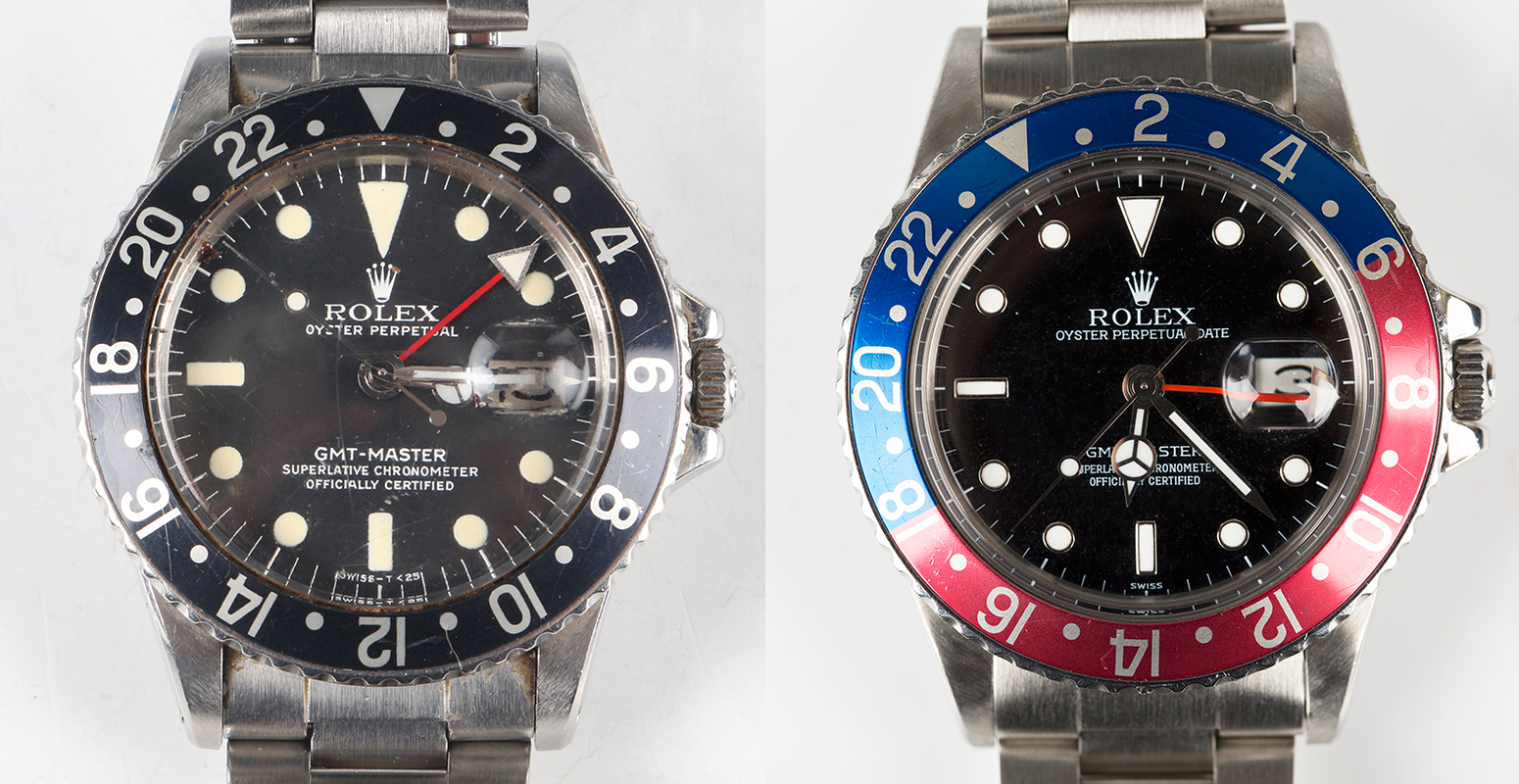
Two Rolex Oyster Perpetual GMT-Master stainless steel cased gentleman’s bracelet wristwatches

The more that AI and the machine made is flagged the stronger the demand for objects which are handmade seems to become. This is certainly true of the booming watch market which are so often built by skilled human craftsmen and women.

Rolex is one of the world’s strongest brands representing more than a century of precision watch making, creativity and aspiration. Rolex was founded in London by Alfred Davis and his brother in law Hans Wilsdorf in 1905. It traded as Wilsdorf and Davis. Hans Wilsdorf wanted his watches to bear a name that was memorable, short and easy to say in any language. In 1908 he registered the trademark ‘Rolex’. In the same year he opened an office in Switzerland. In 1914 the Kew Observatory awarded a Rolex watch a Class A precision certificate for accuracy, a distinction usually reserved for marine chronometers and a reflection of their mastery of the art of time keeping.

Heavy tax duties in the UK after the Great War on luxury imports and exported precious metals used in watch cases caused Wilsdorf to move the company to Geneva, Switzerland.

In 1927 Rolex developed the first waterproof and dust-proof watch named the ‘Oyster’. In 1931 this was complimented by Rolex inventing the world’s first self-winding mechanism.
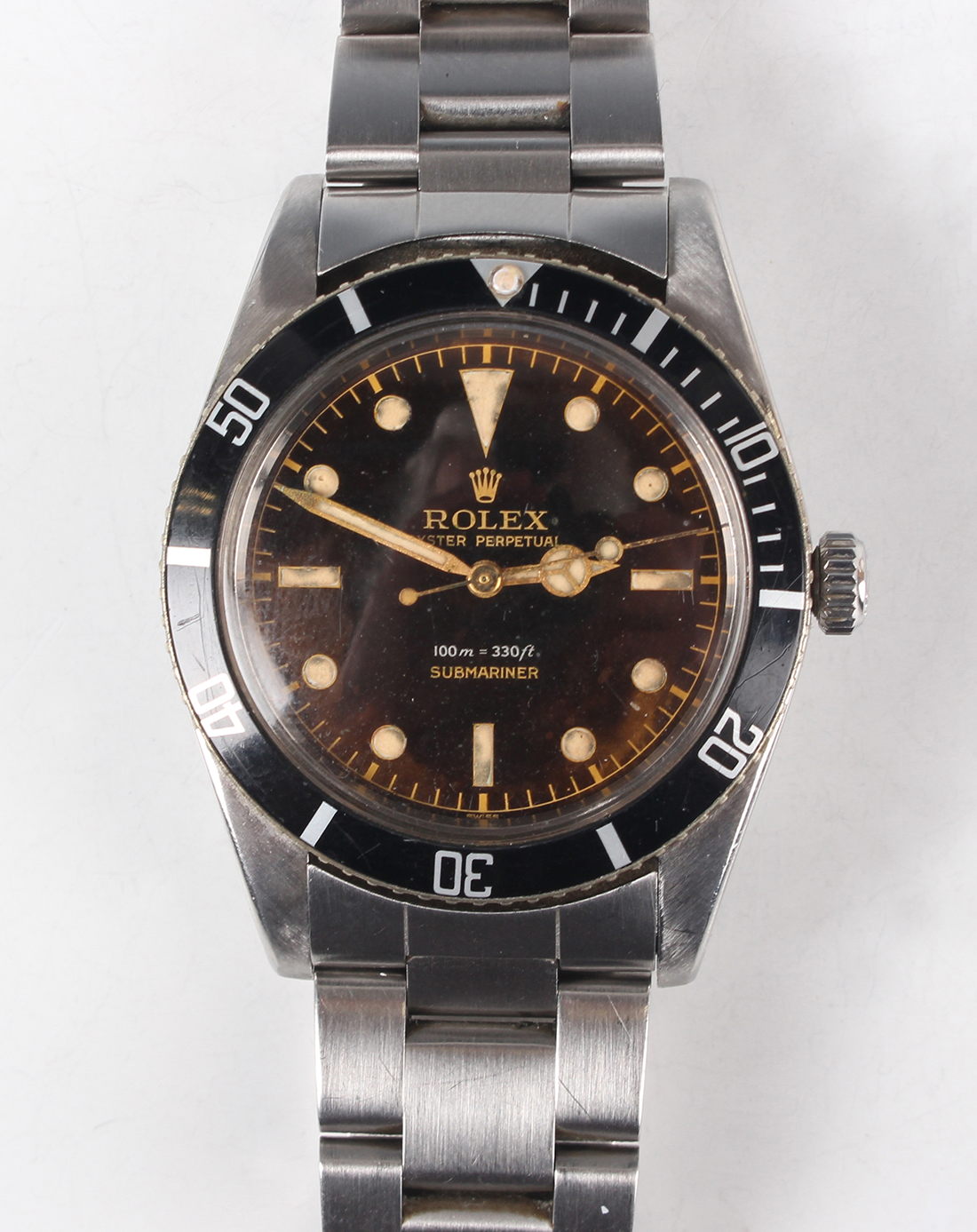
A Rolex Oyster Perpetual 100m-300ft Submariner stainless steel gentleman’s diver’s bracelet wristwatch, circa 1958

Rolex diving watches have been design icons since their introduction in 1953. They were the first diving watches to be waterproof to 330 feet. Introduced in 1955 the mechanism was able to simultaneously show the time in two zones allowing it to be used for navigation by those crossing the globe. The French naval officer, oceanographer, film maker and author, Jacques Cousteau, was one of the first to use them. He famously perfected the Aqua-lung and opened our eyes to life in our oceans with his underwater television adventures aboard the Calypso. The Rolex Oyster Perpetual gentleman’s divers’ 100m-300ft Submariner wristwatch with its stainless steel case and black bezel is an early example dating from 1958. It sold at Toovey’s for £17,500. The later example from 1978 realised £5000. The 1984 Rolex Oyster Perpetual GMT-Master stainless steel cased gentleman’s bracelet wristwatch with its iconic red and blue bezel made £9000.

New or old a Rolex combines the status of a handmade design icon with superlative time-keeping. This combination delights connoisseurs and collectors. Perhaps it’s time to change your wristwatch. Toovey’s Director, Tom Rowsell, is always pleased to offer advice whether you are considering acquiring or selling watches in this growing market.
Battle Of Trafalgar Day

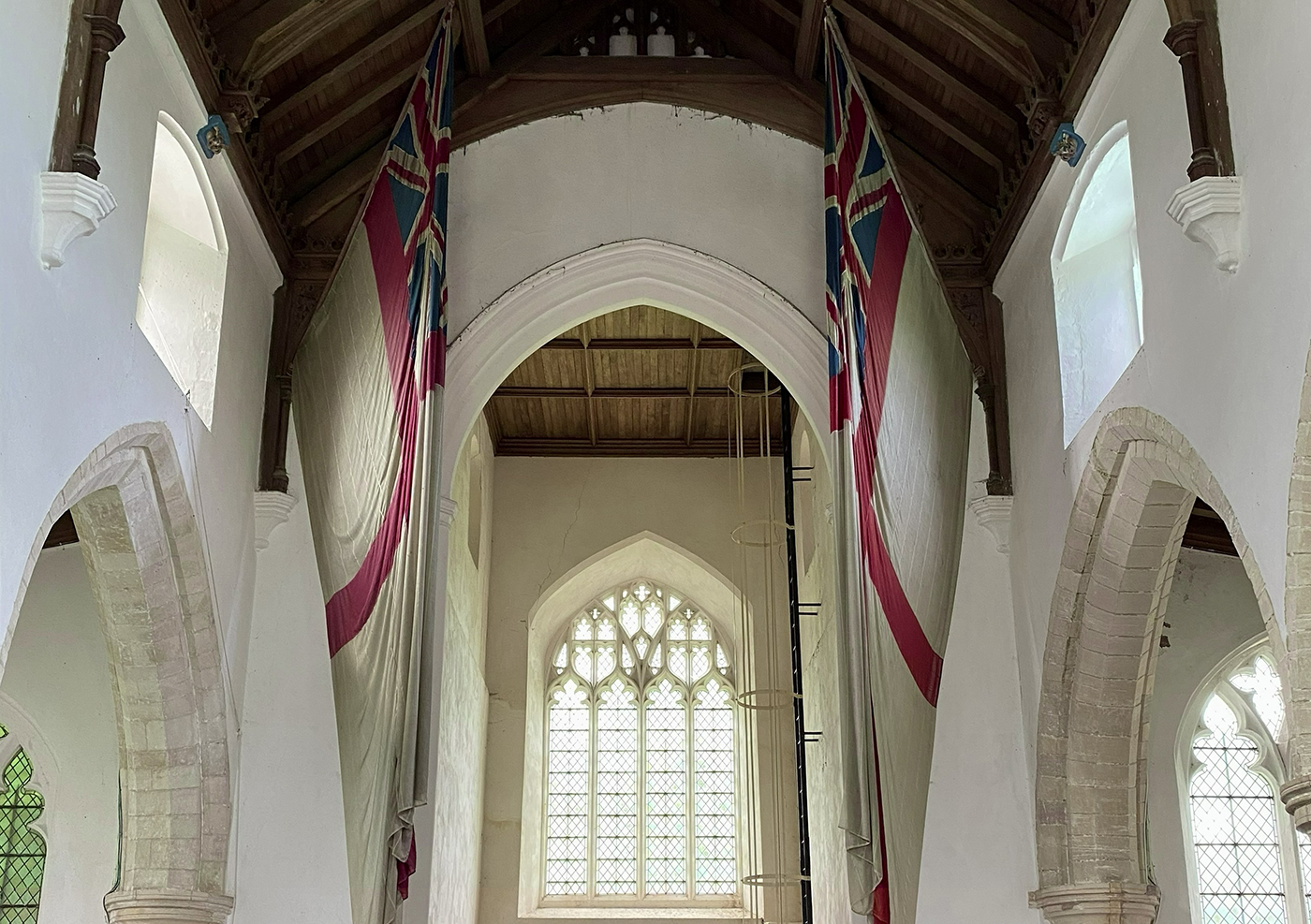
The church at Burnham Thorpe where Nelson’s father was Rector and where he worshipped as a boy

On the 21st October 1805 Vice-Admiral Horatio Nelson defeated the combined French and Spanish fleets at the Battle of Trafalgar.

On the morning of the battle, with the enemy wearing in succession, Nelson knelt and composed his ‘Prayer before the Battle’, “May the Great God whom I worship grant to my country, and for the benefit of Europe in general, A great and glorious victory! And may no misconduct in anyone tarnish it! And may humanity after victory be the predominant feature in the British Fleet. For Myself individually I commit my life to him who made me, and may his blessing light upon my endeavours for serving my country faithfully. To him I resign myself and the just cause which is entrusted to me to defend. Amen. Amen. Amen.”

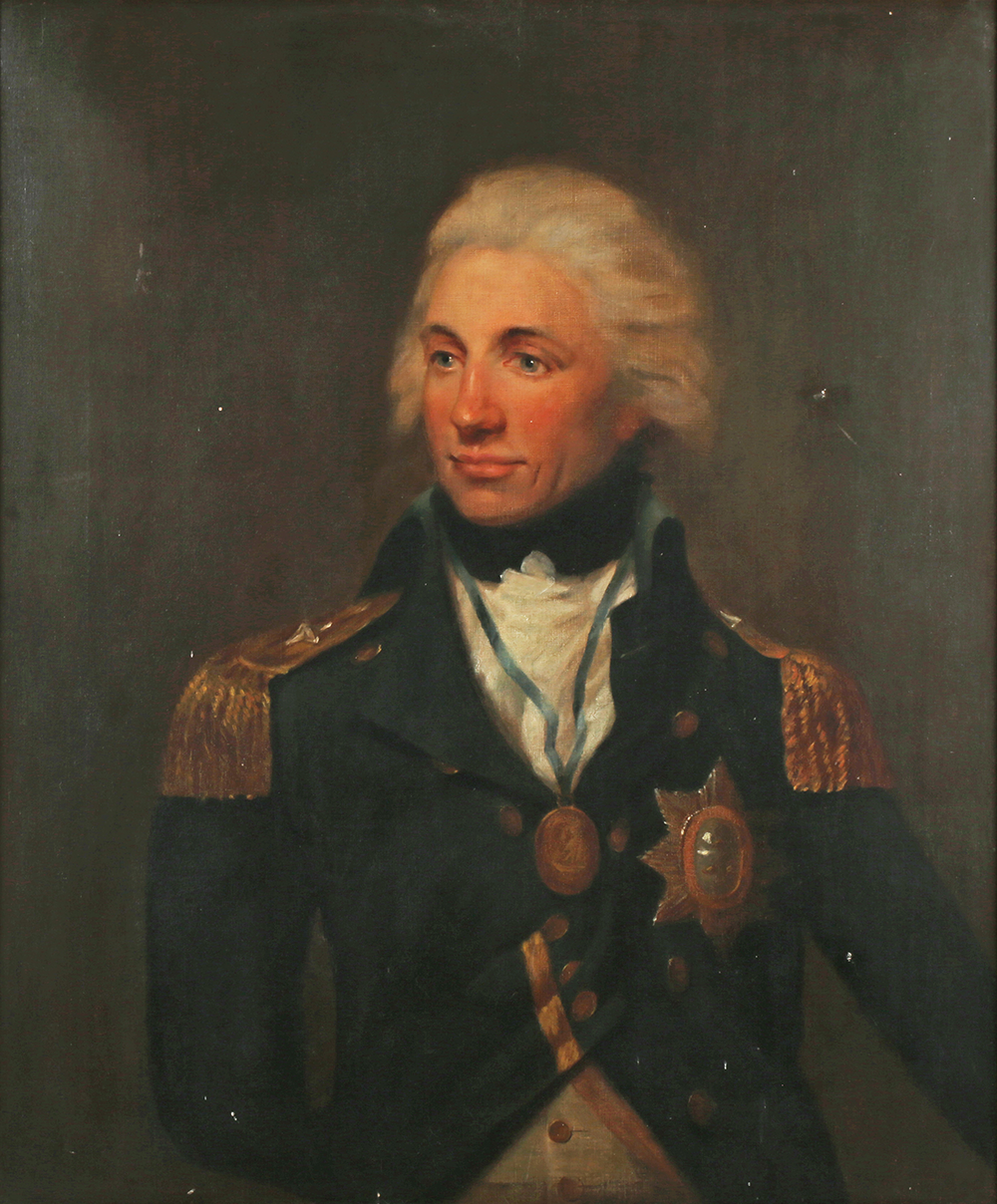
He then ordered the signal be sent “England expects that every man will do his duty”. At noon the order was given to engage the enemy more closely. His plan was to approach the French and Spanish line and attack at right angles in two columns to concentrate on destroying the centre and rear. At a quarter to one HMS Victory broke through the enemy’s line of battle. During the battle Nelson was fatally wounded whilst pacing the decks with Captain Hardy as HMS Victory and the French ship Redoubtable became locked together in close combat. Nelson’s plan of attack won a decisive victory for the British in the Cape of Trafalgar. It halted Napolean’s plan to invade Britain and marked the beginning of a century of British naval supremacy. The portrait of Nelson after Lemuel Francis Abbott, sold at Toovey’s for £3400. It seems to capture the man.

After Lemuel Francis Abbott – Portrait of Vice-admiral Horatio Nelson

Horatio Nelson’s father was the Rector at the Parish Church at Burnham Thorpe in Norfolk. From Burnham Thorpe he went to sea with his late mother’s brother, Maurice Suckling, who was a captain in the Royal Navy. It was here that Nelson’s naval career was seeded and his character became apparent.

As a nation our character is more than just a stiff upper lip. Nelson could be emotional, overindulgent, sentimental, and lachrymose with a blind eye to authority. These overwhelmingly English qualities informed his inspirational and decisive leadership. Nelson’s Prayer before the Battle highlights values and standards we would all aspire to. Servant leadership bound up with duty and a desire to defend freedom and justice for all. On this Trafalgar Day let us give thanks to God for the duty, courage and sacrifice of the men and women of our Royal Navy, past and present.