The Delights of the Edwardian Display Cabinet

An Edwardian satinwood display cabinet
An Edwardian satinwood display cabinet, circa 1910

This week, as I have been visiting clients and friends along the foot of the Sussex Downs, I’ve been struck by the rich way that display cabinets and their contents give delight to their owners.

An Edwardian mahogany Art Nouveau display cabinet
An Edwardian mahogany Art Nouveau display cabinet, circa 1910

Display cabinets have been part of the English home since the 18th century. They provide the collector with the opportunity to display objects to delight the eye and our imaginations. Many of the cabinets you see at auction date from the Edwardian period. They often draw on the classical tastes of the late 18th century. The satinwood example illustrated recently sold at Toovey’s for £2000. It represents the finest craftsmanship and dates from around 1910. Painted with a scheme of rose and ribbon pendants, putti and scrolls, it is both beautiful and practical.

An early 18th century Chinese carved wood figure of Guanyin encased in a provincial display cabinet

Not all display cabinets from the Edwardian period draw on the inspiration of the past. Take, for example, this Art Nouveau mahogany display cabinet, which would almost certainly have been sold by the famous Liberty & Co in London. There is such confidence in its design. The flared canopy and central open shelf seem to allude to an earlier age of English vernacular furniture, and yet this piece embraces the fashion for the Art Nouveau in an uncompromising way. This is articulated in its stained glass and leaded panel door and the stylized floral motifs, inlaid in a variety of woods and mother-of-pearl. The block legs and pad feet are typical of the English Art Nouveau. Today at auction, a cabinet of this quality would realise in excess of £1500.

The contents of display cabinets reveal much about their owner’s passions and interests. Like a painting, each glazed pane of a display cabinet frames a composition. The light plays on the surface of the glass, especially where it is hand-blown and subtly textured, emphasising the layered three-dimensional qualities of the arranged objects. Colour, light and shade play their part in bringing these still-life vignettes to life.

A lively mind may collect a particular field or period. I found this early 18th century Chinese carved wood figure of Guanyin, with its rich blue, ivory and ochre pigment, framed against the gentle tin glaze of a European Delft charger, decorated after the Chinese Transitional taste. Both were nestling undisturbed in a large provincial cabinet.

Of course, others will be more eclectic in their tastes. I was delighted to discover Rupert Bear blowing his own trumpet in the company of a small Roman oil lamp, a piece of the Berlin Wall and a treen vessel, framed by the glass of a wonderful satinwood cabinet.

A Royal Doulton Rupert Bear in the eclectic company of a piece of the Berlin Wall and a small Roman oil lamp

The human activity of dwelling, being ‘rooted’, is important to our well-being. Where we live and our material possessions enable us to articulate who we are and ground us not only in the procession of our own lives but also in the broader procession of human history.

The display cabinet perfectly encases those things which tell the stories of our lives – prompts to both fond memories and knowledge, representing the patchwork quilt of our lives.

Display cabinets and their contents have the power to delight. Perhaps you need one in your life!

By Revd. Rupert Toovey. Originally published on 8th October 2014 in the West Sussex Gazette.

The Library Collection of the late W. Leslie Weller MBE, DL, FSA

The Library Collection of the late W. Leslie Weller MBE, DL, FSA

Tuesday 2nd December 2014 at 11am

Toovey’s are proud to announce this additional sale to our 2014 calendar, which comprises the contents of the library of the late William Leslie Weller (1935-2014), consigned from his former home: Hobshorts House, Rookcross Lane, West Grinstead, West Sussex.

Hobshorts
Hobshorts

Leslie Weller, as he preferred to be known, was born in the Sussex village of Itchingfield. His father was a tenant farmer of some 100 acres close to the church. Leslie was educated at Collyer’s Grammar School in Horsham. His rural upbringing installed in him a love of the Sussex countryside and country pursuits but Leslie also developed strong interests in antiques and the fine arts and Sussex history and antiquities. All these passions would shape his life and work to come. Leslie went on to qualify as a chartered surveyor and in later life held the post of chairman of the Royal Institution of Chartered Surveyors Art and Antiques faculty.

Duke of Beaufort and Leslie Weller © Jim Meads
Duke of Beaufort & W. Leslie Weller © Jim Meads

Leslie enjoyed a long and illustrious career in the field of fine art auctioneering. It was his inspiration and dedication that created the first regional centre of expertise outside London for Sotheby’s. For many years he was chairman of Sotheby’s in Sussex and a director of the firm. His other interests led him to achieve the posts of President of the Sussex Archaeological Society and Master of the Worshipful Company of Ironmongers. He was a keen horseman and an active member of the Horsham and Crawley Hunt for many years.

Leslie's Garden Office at Hobshorts
Leslie in his Garden Office at Hobshorts

Leslie Weller was the first chairman of Chichester Cathedral Restoration Trust and over a period of thirty years played an important part in raising more than £10million for essential restoration work to the building and artworks within, including more recently the cathedral’s panel paintings by 16th century artist Lambert Barnard. For his services to the cathedral and contributions to the arts, Leslie was awarded an MBE in the New Year’s Honours List 2014.

Despite his numerous achievements, Leslie Weller was a modest man who will be remembered with great fondness by his many friends and acquaintances in our local community, Sussex as a whole and far beyond.

Leslie's Garden Office

Company director Rupert Toovey comments: “Leslie was a generous friend and a great inspiration to me. He supported me in becoming a chartered surveyor in the specialist fields of fine art valuation and auctioneering and was delighted when I followed in his footsteps to become chairman of the R.I.C.S. Art and Antiques faculty. It was, therefore, a great honour to be asked by Leslie’s family to conduct this single-owner sale on their behalf.”

Sussex Horsfield extra-illustrated
Fine, extra-illustrated set of Horsfield's Sussex
EH Shepard Original drawing for sale
E.H. Shepard original drawing from Everybody's Pepys

Leslie lived at Hobshorts, a fine 17th century farmhouse in the West Grinstead countryside, with his wife, Brenda, and their dogs. His library was divided between two rooms in the main house and his private office, which was in a charming converted outhouse in the garden, offering a picturesque view across a pond to the South Downs. Leslie’s books reflect all his varied interests and they were very important to him indeed. The sale features a good selection of works on his beloved Sussex, including a fine copy of Thomas Walker Horsfield’s “The History, Antiquities, and Topography of the County of Sussex”, printed at the Sussex Press in Lewes in 1835. Usually in two volumes, this copy was extended to seven in 1892 with about 1500 extra illustrations. Bound in deep purple morocco by Zaehnsdorf, the set will carry a pre-sale estimate of £3000-5000.

An original drawing by the celebrated Sussex book illustrator Ernest H. Shepard leads a collection of other personal effects from Leslie’s library to be included in the sale. Originally published in “Everybody’s Pepys”, this 28 x 18cm pen and ink drawing will be offered with a pre-sale estimate of £600-1000. Other of Leslie’s possessions to be auctioned include maps, a barograph, a globe and two of his gavels.

The sale is on view on Saturday 29th November 2014, from 9.30am to 12noon, Monday 1st December 2014, from 10am to 4pm, and on the day of the auction, Tuesday 2nd December 2014, from 9am to the start of the sale at 11am.

The catalogue will be available in print and online at www.tooveys.com by mid-November.

The Mercedes 300SL Gullwing, the World’s First True Supercar

The iconic gull-wing doors which give their name to the car

As the September dew begins to settle around the Goodwood motor racing circuit, the evocative sound of racing engines and smell of Castrol oil from the 2015 Goodwood Revival are fading to memories. I am visiting my great friend John Young, the renowned racing driver, who has invited me to come and see his rare 1955 Mercedes-Benz 300SL Gullwing, one of the most iconic cars of the post-war era.

As we walk down the drive together in conversation, the Gullwing comes into view and its lines still have the power to excite. The silver beauty before us is particularly special, an example of the world’s first true supercar and in wonderful, original condition. John Young explains, “I bought the car in 1973 from Dennis de Ferranti, who’d had it from new. His father was a brilliant engineer who set up the electronics company Ferranti.” John, the former managing director of the Mercedes-Benz agents Rose and Young, has a particular affinity for the marque. His father, George, founded the firm with his friend Jack Rose. George Young bought out his partner in 1937. “Mercedes were amongst the best cars and selling well,” says John, “so a dealer franchise was hard to get, but we were one of the first in the country.”

The beautiful lines of the Gullwing
The Gullwing’s interior

Contemporary motoring correspondents in the 1950s were fulsome in their praise of these extraordinary cars, though most acknowledged their unforgiving nature if driven hard. John Young smiles as he exclaims, “When you drive a 300SL quickly, it’s important to keep the power on in the corners or they spin – you’ve really got to drive it! Moss was the master.” He pauses and then continues, “Moss was the best driver of these; he was very good.”

After the Second World War, Mercedes were only allowed to return to racing in 1950. 1951 saw a series of victories for the marque including a 1-2 at Le Mans. The Gullwing’s body attracted sensational interest amongst the press and motoring enthusiasts. Stirling Moss’s win in a 300SLR at the 1955 Italian Mille Miglia road race helped to seal Mercedes’ dominance in motor racing and his reputation as one of the greatest drivers of all time. Moss was accompanied by the writer and navigator Denis Jenkinson, known as “Jenks”. Jenks gave an account of Moss’s remarkable drive, writing for Motor Sport in June 1955. It emphasised the driver’s concentration and commitment and his particular gift for setting up and balancing a car at extreme speed through towns and countryside. Moss would later remark that the roadside crowds gave the event a “fiesta feeling”.

Unlike Jenks, John Young remarks that he is a “bad passenger” – unsurprising coming from a man who was used to being in control behind the wheel of a racing car. Amongst many racing drives in 1955, John was a works driver to the Connaught team and raced in the Goodwood Nine Hours Endurance Race in a Lotus-Connaught with John Coombes. “I’ll never forget my mate Roy Salvadori offering to show me a circuit,” he says. “I got in the car but, my goodness, you’d hold on when he was flat out. He went so fast that I slid under the dashboard!” Roy Salvadori famously won Le Mans for Aston Martin in 1959.

John Young, co-driver to his friend John Coombs in a 2.6 Alfa Romeo in the 1988 Mille Miglia Revival

I ask John if he ever competed in the Mille Miglia. He answers modestly, “I drove the 1988 Mille Miglia Revival in an Alfa Romeo 2.6 with John Coombs.”

Gentleman racer and collector John Young in his 1955 Mercedes-Benz 300SL Gullwing

Our conversation returns to John’s beautiful 300SL Gullwing. “These cars were really advanced for their time, with their tubular space frames and in-line, six-cylinder engines, which have a racing note,” he comments. I remark on the large side vents which, like the doors, are such a distinctive feature of the Gullwing. John responds, “They are important for discharging the heat from under the bonnet. Although the lines and details are beautiful, this is above all a properly engineered car.” You sit low in the car and the evocative smell of the original blue leather captures the senses. John explains that most of these cars had fabric seats and that this was a rare option. In the driving seat, your view beyond the ivory coloured steering wheel, instrument binnacle and painted dash is of the long, gently curving bonnet with its two characteristic bulges. Underway, the engine revs rise rapidly and there is a hard note to this engine, reminding you that its heritage is in motor racing. The excitement of the engineered, mechanical qualities of this remarkable vehicle delight the senses. John acknowledges the tremendous acceleration these cars are capable of. Although they were raced, they are truly grand tourers.

Returning to John’s terrace, we sit drinking champagne as the sun begins to set on what will be one of the last warm evenings of the year. With the South Downs before us, my friend John Young regales with stories of a glamorous motor racing age of gentlemen racers and enthusiasts now overtaken. Like its generous owner, this Mercedes-Benz 300SL Gullwing stands as a wonderful testament to this remarkable post-war period.

By Revd. Rupert Toovey. Originally published on 1st October 2014 in the West Sussex Gazette.

August 2014 Postcard Auction Sale Report

Henfield Station at Toovey's Auction
'Henfield Station' postcard, sold for £120

Toovey’s auction of Paper Collectables on 12th August included 146 lots of postcards. With only three lots failing to sell, there is no shortage of talking points:

Partridge Green Station at Toovey's
'Partridge Green Station', sold for £110

Private collectors went loco for a small group of individual postcards of Sussex railway platforms. No less than four successful collectors express-ed an interest, each chuffed with their purchases, once again proving the Sussex postcard market is far from station-ary! Bad puns aside, £120 was paid for an RP of ‘Henfield Station’ with a steam engine entering the now-vanished station. The exact same view with small loss to one corner only made £30, reinforcing the difference condition makes to the private collector. RP views of ‘Partridge Green Station’, ‘The Station, Southwater’ and a different view of ‘Henfield Railway Station’ each sold for £110.

Embroidered silk postcard, from an album that sold for £1500

Topographical postcards were popular throughout the auction but Sussex views continued to steal the headlines. An RP titled ‘Sussex Pruning Camp’, offered with a similar RP, sold for £95. A group of 4 postcards of Partridge Green, including a scarce RP of ‘Jolesfield Windmill’, achieved £140. A similar group of 13 postcards of nearby Cowfold and Shermanbury realised £240 and 31 postcards of Henfield sold for £420. All of these lots went to private collectors.

Outside of the Sussex scene, notable prices included 8 postcards of Barnes and Isleworth, which topped £120. An album of 52 postcards of the Channel Islands, predominantly Jersey, went at £320. A group of 160 of Middlesex reached £340 and £20 was paid for a slightly faded RP of ‘Finchley Rd Station’. A private collection of postcards published by LL performed well too, including a 286-postcard collection of London, which sold for £480.

Little Nap the Chimpanzee postcard, sold for £60
Little Nap, sold for £60

Topography was not the only area of interest. Leading the fray at £1500 was an album of 74 postcards, including a brilliant selection of regimental embroidered silks, which went to an internet bidder despite the busy room. One of the surprising results of the sale came in the form of a single RP of ‘Little Nap’, a chimpanzee dressed-up as Napoleon, which, after a battle between a private collector and the internet, sold for £60 in the room.

1 of 6 by Brunelleschi postcards, sold for £380
Brunelleschi postcards, sold for £380

A good selection of Art Nouveau, Art Deco and glamour postcards also attracted serious interest and stiff competition among bidders. A group of 6 Art Nouveau colour postcards by Umberto Brunelleschi was hotly contested, largely due to their great condition, selling at £380, just over £60 per postcard and nearly double their mid pre-sale estimate. 4 Italian Art Deco postcards by M. Montedoro achieved £130 and 9 postcards by Raphael Kirchner realised £160.

Arguably among the scarcest of postcards included in the auction was a large group of composite puzzle postcards, divided into 11 lots. Highlights included a set of 4 colour printed postcards titled ‘Fridtjof Nansen Nord Polar-Expedition’, which sold to a collector at £130, and a set of 6 French hand-coloured postcards of Barnum Circus, which went for £140. To view all the previous sale results click here.

Toovey’s next auction of Paper Collectables, including postcards, stamps, cigarette cards, photographs, autographs and ephemera, will be held on 4th November 2014. Whilst this auction has now deadlined,  four have been scheduled for 2015 due to the popularity of the Paper Collectable auctions at Toovey’s. Contact us to discuss your postcard collection for one of our future specialist sales.

By Nicholas Toovey, a member of the Postcard Traders Association. Originally published as a Sale Report in Picture Postcard Monthly October 2014 issue.

Art & Objects Transforming Lives at Pallant House Gallery

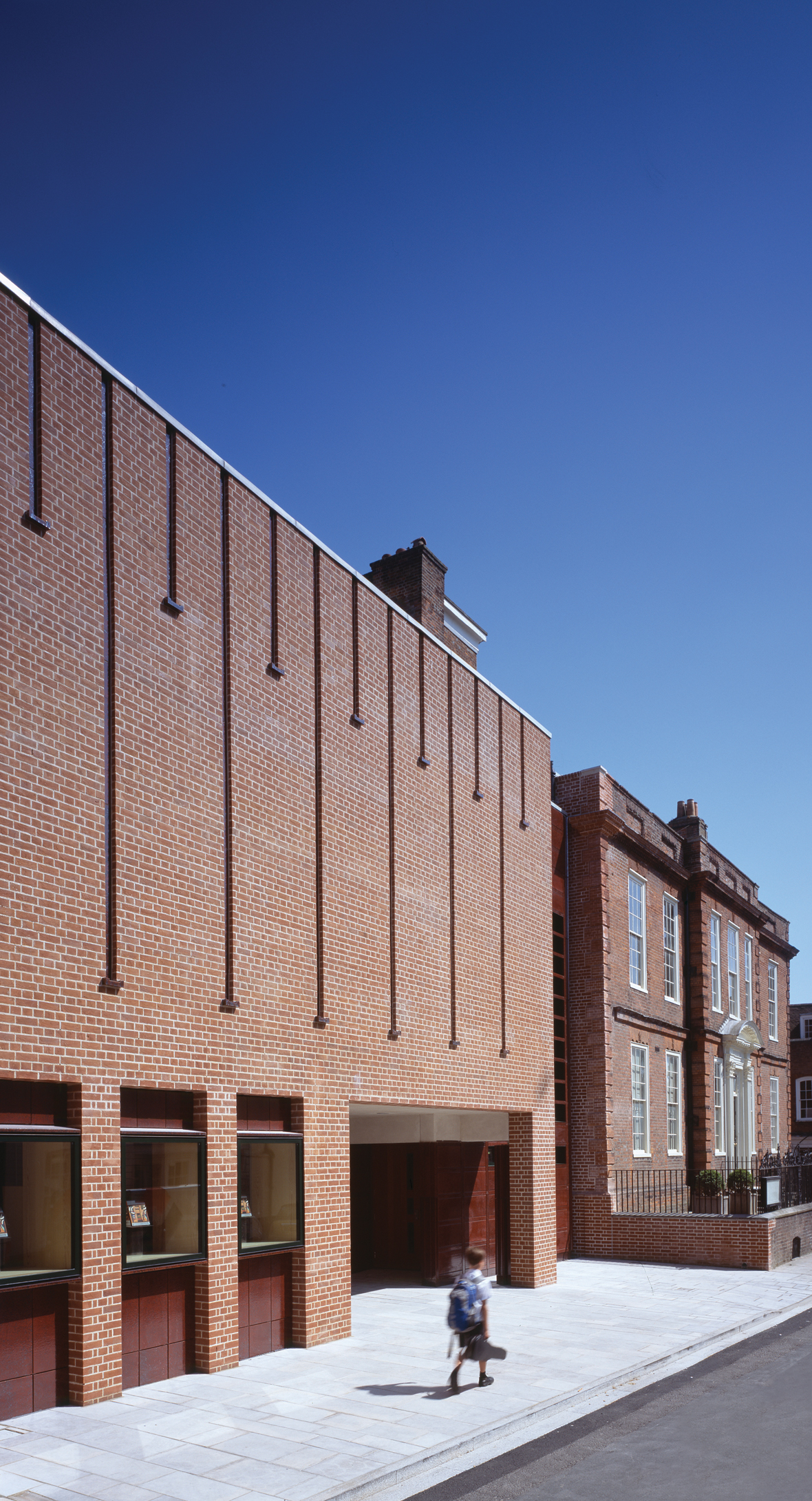
The Queen Anne town-house and the new wing of Pallant House Gallery in Chichester

I am always humbled and delighted by the ability of art to transform and enrich our lives. It is for this reason that a team of Toovey’s specialist valuers will be at Pallant House Gallery in Chichester on the afternoon of Monday 29th September 2014, to offer free pre-sale valuations and advice on selling your fine art, antiques and collectables by auction. A third of the seller’s commission for items subsequently auctioned by Toovey’s will be donated to Pallant House to help with the gallery’s important work.

Engaging with art can often reveal to us something of our world beyond our own perception. The process of creating art can enable us to understand something of ourselves, giving voice to where we have come from, where we are and where we would like to be. Pallant House Gallery provides opportunities for art to affect us in both these ways, through its world-class exhibitions, its Learning and Community Programme and its work with the ‘Outside In’ project.

Pallant House has been referred to as ‘a jewel’ and ‘one of the most important galleries for British modern art in the country’. It opened in its present incarnation to national critical acclaim in July 2006. The remarkable £8.6 million build project, which took nearly three years to complete, seamlessly married the original Queen Anne, Grade I listed town-house and the new wing, quadrupling its exhibition space.

Pallant House’s pioneering Learning and Community Programme gives people of all ages and abilities the chance to explore their enjoyment of art. Outside In was founded by the gallery in 2006 with the aim of establishing a platform for artists who have a desire to create but who see themselves as facing a barrier to the art world for reasons including health, disability and social circumstance. The goal of the project is to create an unprejudiced environment which rejects traditional values and institutional judgements about whose work can and should be displayed.

At the heart of Outside In is an avoidance of labelling and there are no set criteria for an artist’s inclusion. Marc Steene, Executive Director at Pallant House Gallery, has spearheaded the project, describing it as a ‘gentle revolution, designed to enable a fairer art world where all who create have an equal opportunity to sit at the table and have their work seen and valued’. In 2013, Outside In won a prestigious Charity Award in the Arts, Culture, and Heritage category.

It is the qualities of community and outreach which lend this fantastic organisation a vibrant quality and give soul to this important regional art gallery.

I will be at Pallant House with a group of fellow Toovey’s experts offering a range of specialisms, including fine paintings and sculpture, European and Oriental ceramics, jewellery and medals, clocks and watches, collectors’ toys, military items and antique firearms and edged weapons. No appointment is necessary; just turn up with your treasures and we will be pleased to provide free auction valuations and advice. If your items are difficult to transport, bring photographs, email images to Toovey’s beforehand or telephone to make an appointment for one of us to visit your home on another day. For more information, please contact Toovey’s.

I am really looking forward to being at Pallant House Gallery, 9 North Pallant, Chichester, PO19 1TJ, on Monday 29th September between 1pm and 5pm. Perhaps your art, antiques and collectables will transform not only your own life but the lives of others through this fundraising event!

By Revd. Rupert Toovey. Originally published on 24th September 2014 in the West Sussex Gazette.